
The Truth About INFPs: How to Embrace Who You Are and Stop the Inner Critic


When you search "INFP" online, you might also see suggestions like "INFP trash." Some people say that INFPs in MBTI are too emotional, often stuck in overthinking and perfectionism, and struggle to adapt to the real world.
Let's start with the conclusion: as an INFP, you are not a "broken person." Being exaggerated as a "useless type" may come from INFP traits—sensitivity, sincerity, and strong values—that create an almost instinctive drive to "be yourself" and "do what's right." In this article, we'll talk about common INFP traits and practical ways to work through difficult emotions, helping INFPs understand themselves better and uncover their unique value.
3 Reasons INFPs Often Feel "I'm Terrible"
1. Ideals are too perfect, but actions don't follow
INFPs think deeply and see far, often painting a clear picture of an ideal in their mind. But when the standard is set to "perfect," reality never seems good enough. So INFPs may replay self-checks in their head: Why haven't I done it yet? Why do I always procrastinate? Over time, this inner tug-of-war can make you believe you're not good enough. In reality, INFPs aren't incapable—they need practice breaking a vision into workable steps. When ideals can be turned into action, overthinking naturally eases.
2. Too many imagined scenarios, emotions get pulled by assumptions
When a friend leaves you on read, or no one responds in a meeting, an INFP's mind can quickly run the worst script: "Do they hate me?" This is a common kind of worst-case thinking and labeling. As the story grows, emotions get swept along. INFPs are especially sensitive in relationships and want to understand others' reactions right away; it helps to pause, not rush to a conclusion, and check whether the facts are really as scary as the mind suggests—so emotions can gradually settle.
3. Chasing "meaning" while forgetting to take care of yourself
INFPs often pour their energy into what they find "meaningful," but everyday life is full of small, repetitive tasks. When your days are packed with chores and you can't feel the value, it's easy to slip into doubts like "Am I too useless?" or "Why can't I get motivated?" In moments like this, try finding a small sense of meaning in routine tasks, or remind yourself after finishing something small, "This is also part of life," so your inner drive can restart.
4 Simple Ways to Help INFPs Break Out of Difficult Emotions

1. The 3–3–3 body-first method
When emotions run high or thoughts won't stop, there's no need to rush into analyzing why. Start by settling your body first. Take 3 sips of water, do 3 deep breaths, and walk around for 3 minutes — these three actions aren't limited by time or place, and they're easy to do anytime, anywhere. As your body steadies, your nervous system can gradually relax, giving your mind more breathing room to figure out the next step.
2. The emotion color-palette method
If you like writing, try this once a day: "My emotional color right now is —, because —." Use one sentence plus one color to quickly notice your current state. For example, if you find the color stays yellow or red for two days in a row, it may mean your energy is being used up. You can intentionally plan a simple wind-down ritual before bed, or decline non-essential social plans, so you can adjust earlier—before things feel out of balance.
3. The energy sandwich method
Plan your day like a sandwich with a "front–middle–end" structure: start with a task that "matches your values," such as important work or Quality time with your partner; use the middle for errands and routine work; and end with a reward, like listening to music or taking a walk. This method helps you feel value at the very start of the day, keeps your actions more directed, and reduces overthinking.
4. The self-encouragement jar method
Prepare some sticky notes and a small jar. Each day, when you finish something, write "date + task" on a note and drop it into the jar. At the end of each week, pour them out and read through them, reviewing what you completed. The goal is simple: to help you clearly feel "I'm moving forward." When thoughts like "I'm not good enough" pop up again, these small notes will remind you—they're proof of your effort.
To INFPs: You don't need to become someone else—you need to become more like yourself

When you feel out of sync with the world, and keep feeling "too sensitive," "too slow," or "too useless," please don't rush to blame yourself. Maybe you just haven't found the pace and way of doing things that fits you yet.
INFPs don't need to become another kind of person. Instead, you can understand yourself better and care for yourself more, so the traits you already have — sensitivity, sincerity, and strong values — can be used in the right way. When you learn to break down ideals, manage your energy, and notice your emotional signals, overthinking will slowly ease, and your actions will feel more grounded. Becoming more like yourself is your real direction of growth.
Let Sort AI Give INFP You a Hand
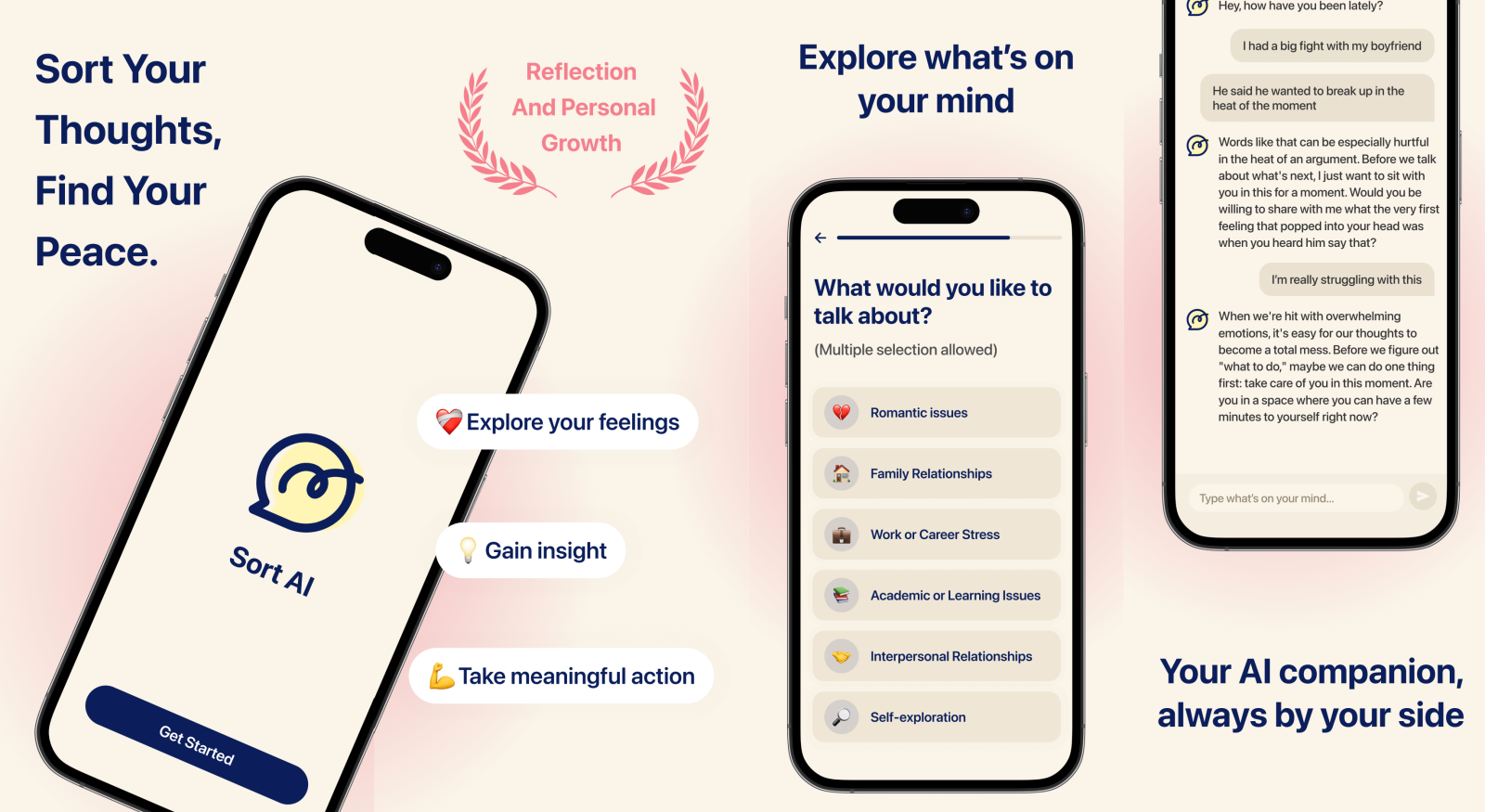
As you work on becoming more like yourself, you may sometimes feel lonely, confused, or lose your direction. When that happens, let Sort AI help. Sort AI is an AI chat app designed with support from psychology professionals, guiding you to organize your thoughts, clarify what you feel, identify your needs, and receive clear, practical responses in daily life.
Whether you want to clarify your next step when you're stuck, get support when you're feeling low, or simply talk to someone who won't judge you, Sort AI is a supportive conversation companion you can chat with anytime—walking alongside your idealistic self, step by step, toward a steadier you.
Download Sort AI App now: